

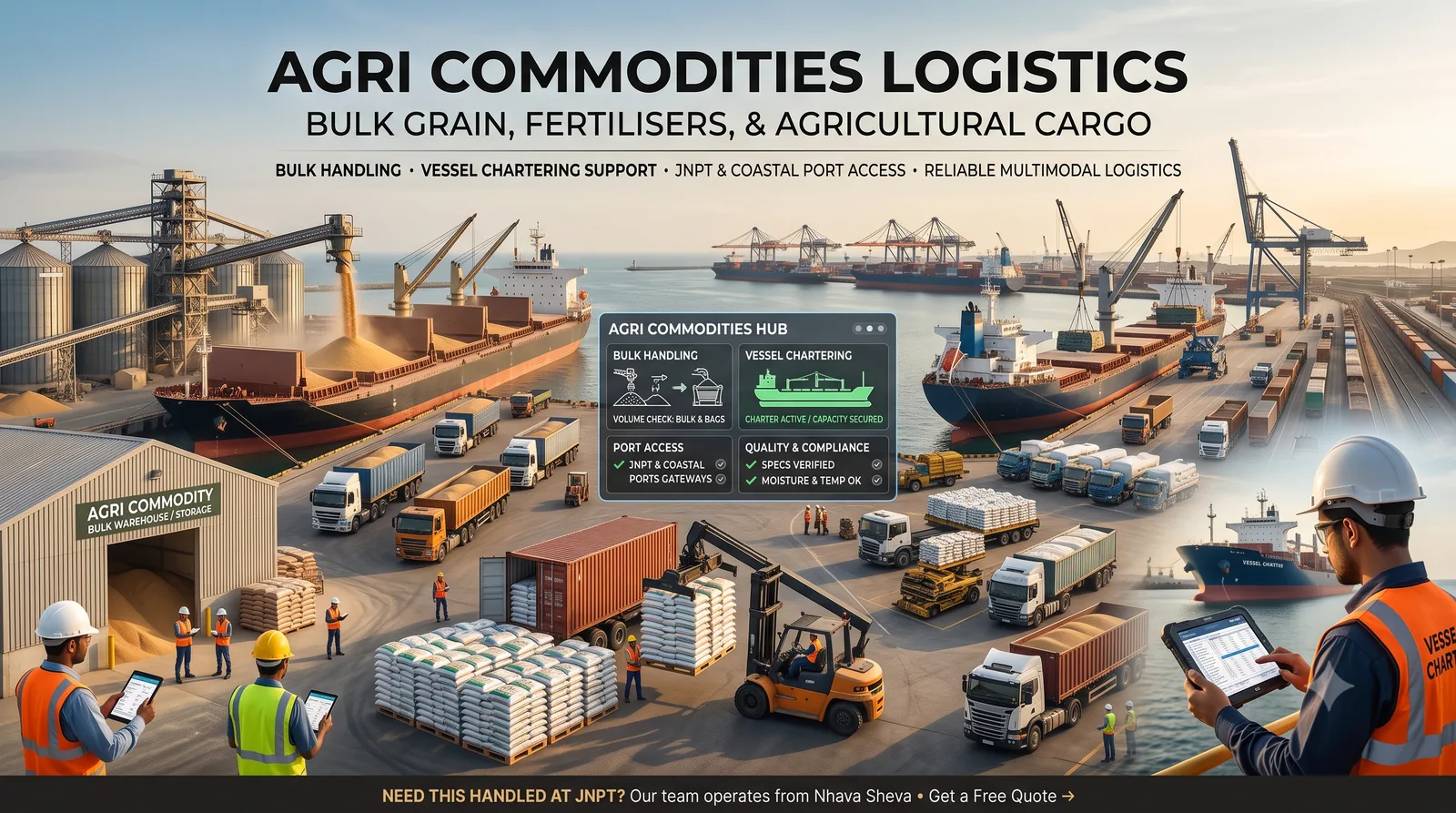
Agri-commodity cargo — bulk grain, fertiliser, and other agricultural bulk — moves under pressures that containerised general cargo does not: seasonality, quality retention, and fumigation requirements chief among them.
A meaningful share of agri-commodity trade still moves as bulk or break-bulk rather than containerised, particularly for grain and fertiliser. That shapes everything downstream — vessel selection, port handling, and storage all follow from the cargo form, not the other way round.
Agricultural cargo frequently requires fumigation certificates and is subject to plant quarantine inspection at both ends. Building that step into the schedule up front avoids the more expensive version of the same requirement discovered at the port.
Harvest cycles concentrate demand for vessel space and CFS capacity into narrow windows. Shippers who lock in vessel and storage commitments ahead of the seasonal peak get materially better terms than those competing for space once the rush has started.
Moisture control, contamination avoidance, and correct stacking matter as much for agri-commodities as temperature control does for pharma — the cargo is perishable in a different sense, and handling errors show up as quality claims rather than obvious damage.
Where the commodity is moving between Indian ports or inland, rail rake movement and coastal shipping are often more cost-effective than road for the volumes typical in this sector, provided the first- and last-mile connections are planned alongside them.
For large bulk consignments, chartering a vessel outright is frequently more economical than booking liner space, particularly on established agri-export lanes. Whether that makes sense for a given shipment depends on volume and timing, which is worth working through before committing to either. See our vessel chartering service for how we run this.
This sector is one of several we support directly — see the full range on our industries we serve page.
Our team operates from Nhava Sheva. Send us the details and we will come back within two business hours.
Get a Free Quote →