

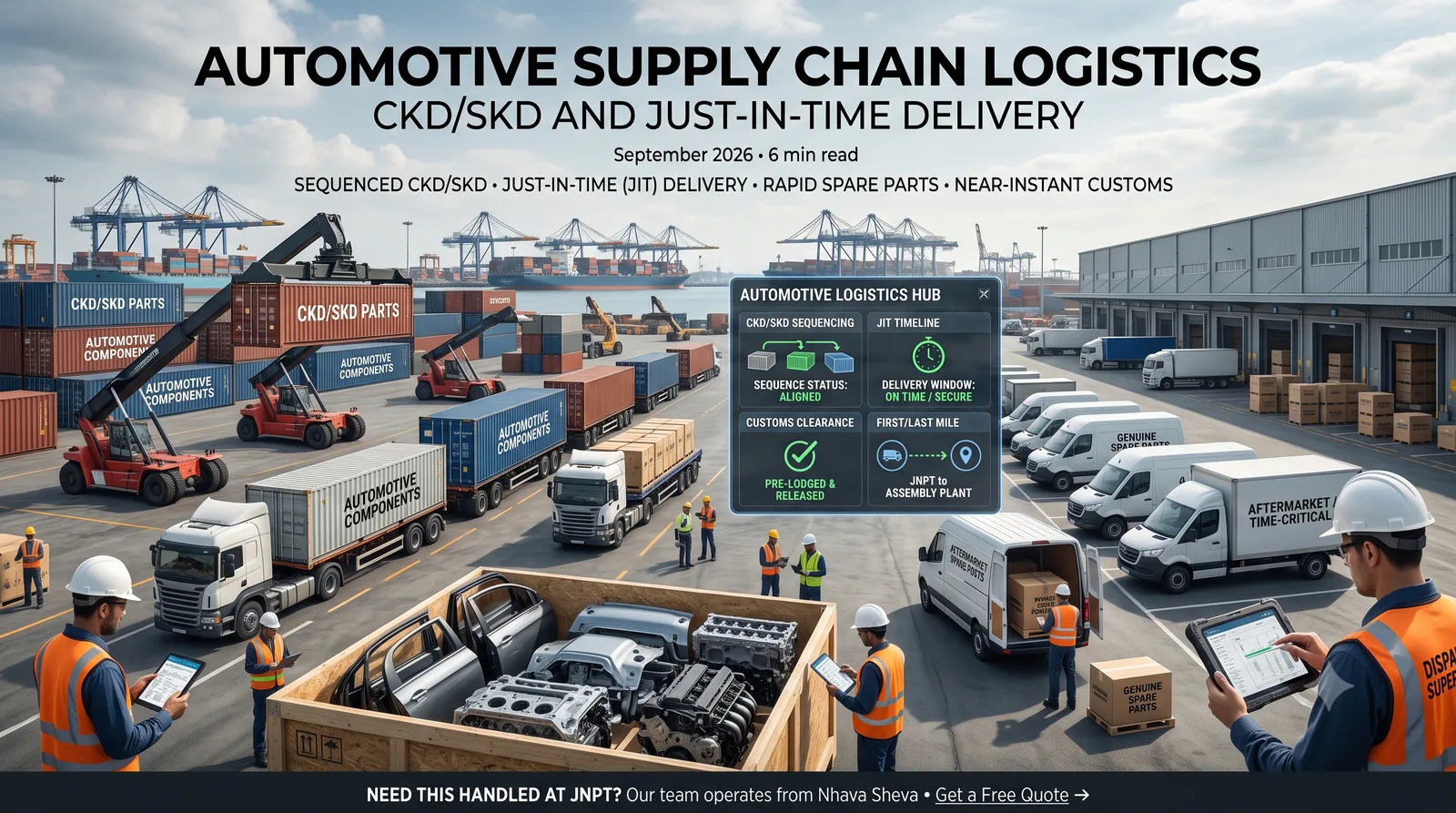
Automotive logistics is one of the few cargo categories where a delivery a few hours late can stop an assembly line — that reality shapes every part of how CKD/SKD and spare parts shipments need to be handled.
Completely and semi-knocked-down container shipments are typically sequenced against a specific build schedule at the destination plant. A container arriving out of sequence can be as disruptive as one arriving late, even if the overall transit time is unchanged.
OEM supply chains built around just-in-time delivery leave very little buffer for delay. This means transportation, customs clearance, and CFS handling for automotive cargo need tighter coordination and less tolerance for the small delays that other cargo types absorb without consequence.
Aftermarket and spare parts shipments are typically smaller, more frequent, and often more time-critical per shipment than CKD volumes — a stocked-out dealership or service center is an immediate commercial cost, not a scheduling inconvenience.
Automotive supply chains generally cannot absorb the clearance delays that other cargo types tolerate. Pre-lodged documentation and an on-site clearance presence at the port make the difference between a JIT delivery and a missed one.
Some buffer stock is usually necessary even in JIT models, but oversized buffers defeat the purpose and tie up capital. Warehousing for automotive cargo needs to be sized deliberately, not as a hedge against logistics unreliability.
First- and last-mile transportation timed precisely against plant delivery windows is what actually delivers on a JIT commitment — the international leg matters, but the final delivery window is usually where the real risk sits. See our transportation service for how we run this.
This sector is one of several we support directly — see the full range on our industries we serve page.
Our team operates from Nhava Sheva. Send us the details and we will come back within two business hours.
Get a Free Quote →