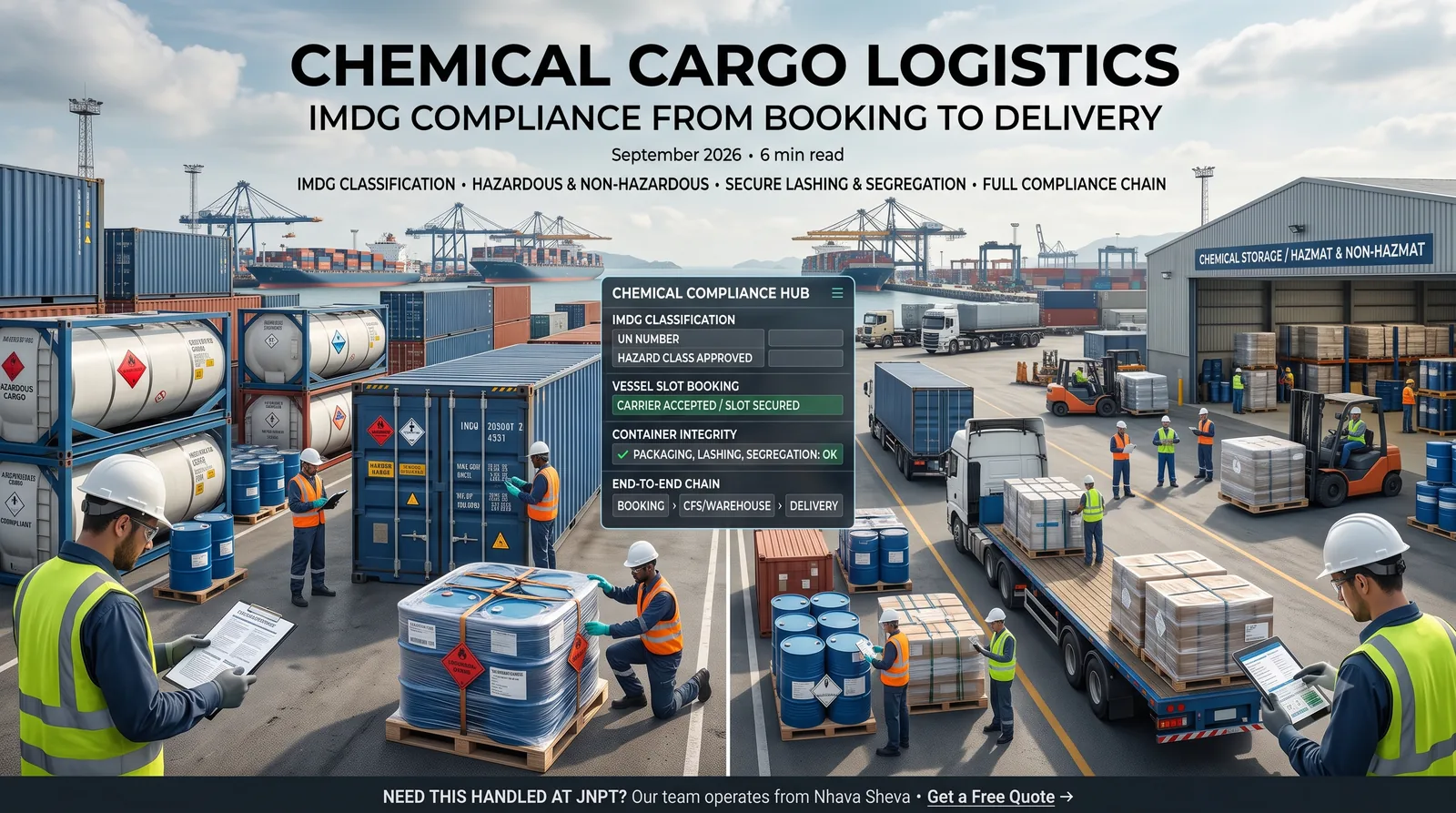
Chemical cargo — hazardous and non-hazardous alike — moves under IMDG rules that determine everything from container selection to stowage to the documentation a shipping line will accept.
The IMDG class, UN number, and packing group for a chemical shipment determine which vessels, which stowage positions, and which documentation apply. Getting this settled before booking avoids a rejected booking or a re-classification scramble close to the vessel cut-off.
Shipping lines vary in which hazard classes they carry and on which vessels, and slot availability for certain classes is more limited than for general cargo. Chemical shippers need this checked at the planning stage, not assumed.
Cargo that falls outside IMDG hazard classes but is still chemical in nature often needs safety data sheets and specific certificates to satisfy customs and the carrier, even without dangerous-goods handling requirements.
Correct packaging, segregation from incompatible cargo, and proper lashing are what prevent leaks, contamination, and the safety incidents that chemical cargo is uniquely exposed to if handling shortcuts are taken.
A chemical consignment that is correctly classified and documented for the vessel leg still needs matching handling discipline at the CFS and in any warehousing along the way — the compliance chain doesn't end at the port gate.
Proper palletisation, lashing, and segregation-aware handling — the core of our value-added services — is what keeps chemical cargo compliant and damage-free across the full movement, not just the vessel leg. See our value-added services for how we run this.
This sector is one of several we support directly — see the full range on our industries we serve page.
Our team operates from Nhava Sheva. Send us the details and we will come back within two business hours.
Get a Free Quote →