When does chartering a vessel make more commercial sense than booking liner space? A practical comparison for bulk and project shippers.
Freight forwarding books your cargo onto someone else's scheduled service. Chartering hires the vessel itself — or a defined portion of its capacity — for your voyage. The first buys space on a timetable; the second buys control of the timetable.
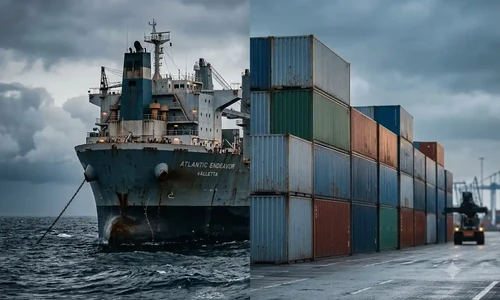
For containerised cargo moving on established trade lanes, liner services are almost always more economical. You share the vessel's cost across hundreds of shippers, sailings are frequent, and the administrative burden sits with the carrier. FCL and LCL both fall squarely here — this is what our ocean freight FCL/LCL service is built for.
Chartering becomes compelling when cargo does not fit a container, when volumes are large enough to fill meaningful vessel capacity, or when schedule certainty is worth paying for. Bulk commodities, break-bulk, and heavy project consignments are typical candidates.
A voyage charter covers a defined passage between named ports, with the owner retaining operational responsibility. A time charter hires the vessel for a period, giving the charterer commercial direction over where it trades. Voyage charters suit one-off movements; time charters suit sustained programmes.
Chartering shifts risks onto the charterer — laytime, demurrage, and port cost exposure among them. A charter that looks cheaper on the freight line can be more expensive once demurrage is counted. Modelling laytime honestly before fixing is essential.
Very few Indian forwarders hold direct owner-operator relationships. Because we do, clients can compare a liner quotation against a genuine charter option from the same desk, rather than being steered toward whichever product their agent happens to sell. See our vessel chartering service for how we structure voyage and time charters.
Our team operates from Nhava Sheva. Send us the details and we will come back within two business hours.
Get a Free Quote →